
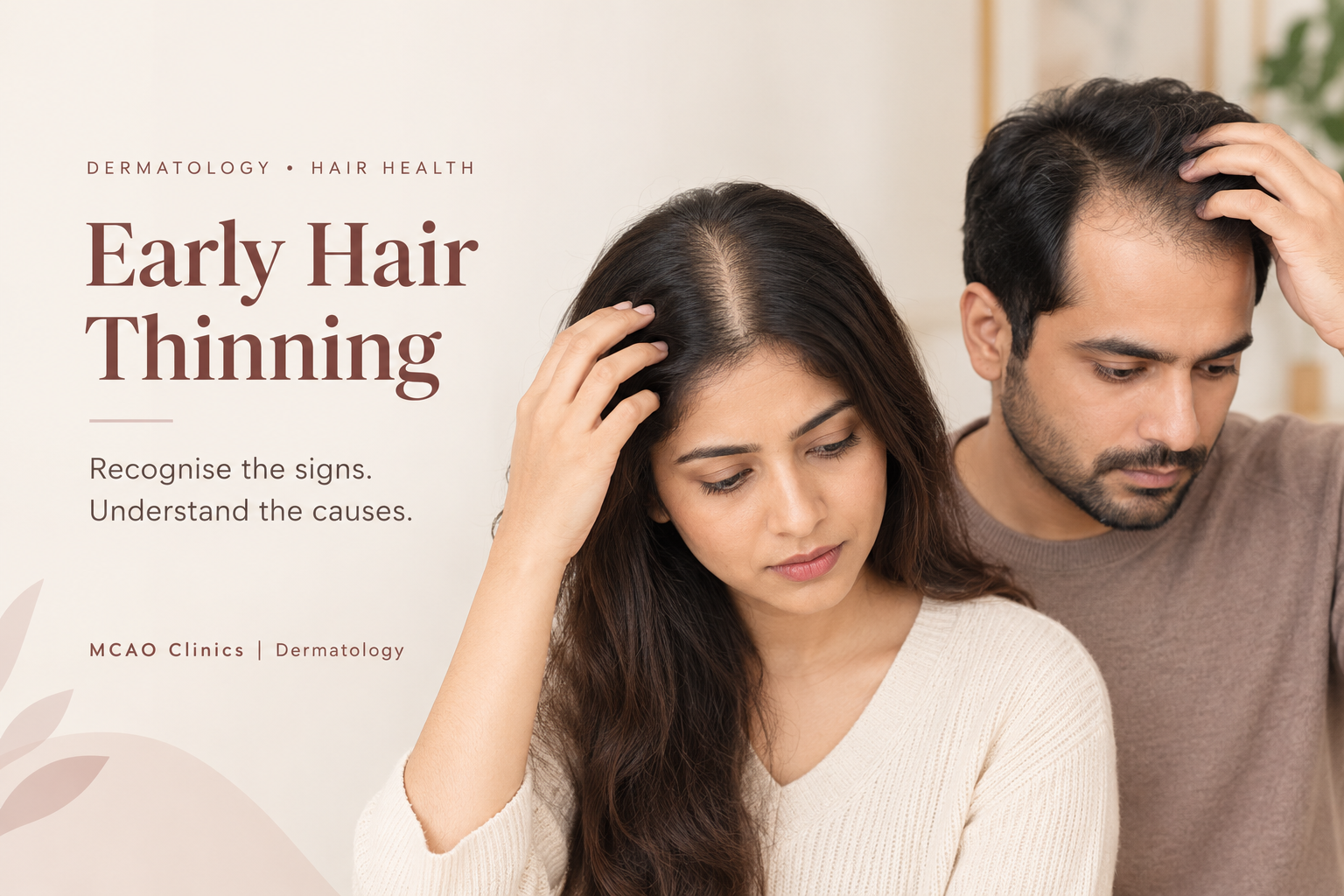

Early Hair Thinning in Men and Women: Causes, Treatment and When to See a Dermatologist
Noticing more scalp through your hair, a wider parting, or a receding hairline can be worrying. Many people try different shampoos, oils, and hair supplements before finding out why their hair is thinning.
However, early hair thinning can have several causes, including genetics, stress, nutritional deficiencies, thyroid conditions, hormonal changes, and scalp disorders. The right treatment depends on identifying the cause rather than trying products at random.
This guide explains the early signs of hair thinning in men and women, common causes, available treatment options, and when to consult a dermatologist.
What Are the Early Signs of Hair Thinning?
It is normal to shed some hair every day. Many people lose around 50–100 hairs daily, although the amount varies. Hair thinning may become noticeable when shedding increases, hair strands become finer, or new growth does not adequately replace lost hair.
Look out for these changes:
Widening hair parting: More scalp becomes visible along the centre of the head.
Reduced hair volume: Your ponytail feels thinner or your hair looks less dense.
Receding hairline: The hairline moves backwards, particularly around the temples.
Thinning at the crown: The scalp becomes more visible at the top of the head.
Persistent hair shedding: You notice more hair than usual on your pillow, comb, or in the shower.
Finer hair strands: Hair grows back thinner or shorter than before.
A short period of increased shedding does not always mean permanent hair loss. However, persistent or progressive thinning deserves medical assessment, especially when accompanied by scalp symptoms or other changes in your health.
What Causes Hair Thinning in Men and Women?
Hair thinning does not have a single cause. Understanding the pattern, medical history, recent illnesses, diet, and other symptoms can help a dermatologist identify what may be happening.
1. Genetics and Pattern Hair Loss
Androgenetic alopecia, commonly called pattern hair loss, is a frequent cause of gradual thinning. Genetic factors and the sensitivity of hair follicles to hormones contribute to this condition.
In men, it often appears as a receding hairline or thinning around the crown. In women, it may cause a widening parting and reduced hair volume, often without a pronounced receding hairline.
Pattern hair loss can begin in early adulthood. Assessment can help determine whether treatment may slow further thinning and improve hair density.
2. Stress, Illness, or Sudden Physical Changes
High fever, major surgery, childbirth, rapid weight loss, and significant physical or emotional stress can trigger a condition called telogen effluvium.
In this condition, more hairs than usual enter the shedding phase. Hair fall may become noticeable two to three months after the triggering event, which can make the cause difficult to recognise.
This type of shedding often improves when the underlying trigger resolves, although recovery may take several months. Persistent shedding should be assessed rather than automatically attributed to stress.
3. Nutritional Deficiencies
Low iron levels and certain nutritional deficiencies can contribute to hair shedding in some people. Crash dieting, inadequate protein intake, or a restricted diet may also play a role.
However, not every case of hair thinning is caused by a deficiency. A dermatologist may recommend blood tests based on your symptoms, diet, medical history, and scalp examination.
Avoid taking iron or high-dose vitamin supplements without confirming that you need them. Supplements are not a substitute for identifying the underlying cause of hair loss.
4. Thyroid Problems
Both an underactive thyroid and an overactive thyroid can contribute to diffuse hair thinning across the scalp.
Other symptoms may include tiredness, changes in weight, dry skin, changes in temperature tolerance, or menstrual irregularities. These symptoms are not specific to thyroid disease, so testing may be needed to establish the cause.
A doctor may recommend thyroid function tests when your history and symptoms suggest a thyroid problem.
5. PCOS and Other Hormonal Changes
In women, polycystic ovary syndrome (PCOS) may be associated with scalp hair thinning, acne, irregular periods, and increased facial or body hair.
Hair density may also change after pregnancy or around menopause. However, hair thinning alone does not confirm a hormonal condition.
If hair loss occurs alongside irregular periods, persistent acne, or other hormonal symptoms, a medical assessment can help determine whether further investigation is needed.
6. Scalp Conditions and Hair Care Habits
Scalp conditions such as seborrhoeic dermatitis, fungal infections, and certain inflammatory disorders can cause itching, scaling, inflammation, or hair loss.
Hair care practices can also contribute. Repeated tight hairstyles may cause traction alopecia, while excessive heat and chemical treatments can weaken hair and increase breakage.
Some medicines can also contribute to hair shedding. Inform your doctor about prescription medicines, over-the-counter products, and supplements you use. Do not stop a prescribed medicine without medical advice.
7. Autoimmune Hair Loss
Round or clearly defined patches of hair loss may indicate alopecia areata, an autoimmune condition that affects hair follicles.
Patchy hair loss is different from ordinary gradual thinning. Sudden hair loss, smooth bald patches, or changes involving the eyebrows or eyelashes should be assessed by a dermatologist.
Can Early Hair Thinning Grow Back?

Recovery depends on the cause and how long the hair loss has been present.
Temporary shedding: Hair may recover after the triggering illness, stressor, or nutritional problem is addressed.
Pattern hair loss: Treatment may slow progression and improve density, but continued treatment is often needed to maintain the benefit.
Scalp inflammation or other disorders: Improvement depends on identifying and treating the specific condition.
Scarring hair loss: Damage to the follicles can be permanent, making prompt assessment particularly important.
Hair grows slowly, so visible improvement usually takes time. Many hair-loss treatments require several months before their effects can be evaluated.
Early assessment can help identify the cause and avoid unnecessary delays, but regrowth cannot be guaranteed.
Which Hair Thinning Treatments May Help?
There is no single treatment suitable for everyone. A dermatologist selects an approach based on the diagnosis, age, medical history, pattern of hair loss, and treatment risks.
1. Treating the Underlying Cause
If an assessment identifies a nutritional deficiency, thyroid disorder, scalp condition, or another medical problem, treatment will focus on that cause.
For example, a confirmed deficiency may require appropriate replacement, while a thyroid disorder needs condition-specific management. Women with signs of PCOS may need evaluation for related hormonal and metabolic concerns.
Treating the underlying problem may help reduce shedding, but the degree and speed of recovery vary.
2. Prescription and Topical Medicines
Topical minoxidil is commonly used for certain types of pattern hair loss in men and women. It is not suitable for every cause of hair loss, and the formulation and instructions should be appropriate for the individual.
A dermatologist may consider other medicines in selected cases. Some treatments have important restrictions, including risks during pregnancy, and should only be used after medical assessment.
Some people experience an initial increase in shedding after starting minoxidil. Results can take several months, and benefits may be lost after stopping treatment. Follow your doctor’s instructions and discuss unexpected symptoms or concerns.
3. Nutritional Support
Supplements may be recommended when an assessment identifies a deficiency or a specific nutritional need.
Biotin is often promoted in hair supplements, but evidence for improving hair growth in people without a biotin deficiency is limited. High-dose biotin can also interfere with certain laboratory test results.
Avoid starting multiple supplements at once without discussing them with a qualified healthcare professional.
4. Platelet-Rich Plasma (PRP) Therapy
Platelet-rich plasma (PRP) involves collecting a small sample of blood, processing it to concentrate platelets, and injecting the prepared plasma into the scalp.
PRP may help some people with certain types of pattern hair loss, but results vary and the supporting evidence is still developing. It usually involves multiple sessions, and maintenance may be needed.
PRP is not appropriate for every type of hair loss. A dermatologist should first assess the cause, explain the likely benefits and limitations, and discuss costs and alternatives. No procedure can guarantee hair regrowth.
5. Everyday Habits That Support Hair Health
Simple hair care measures can help reduce avoidable breakage and support overall hair health:
Handle wet hair gently and avoid rough towel-drying.
Avoid hairstyles that repeatedly pull tightly on the roots.
Reduce excessive heat styling and harsh chemical treatments.
Use suitable products and seek treatment for persistent dandruff or scalp irritation.
Eat a balanced diet with adequate protein and varied nutrient sources.
Avoid crash diets and seek help for significant or unexplained weight changes.
Maintain a regular sleep routine and use practical stress-management strategies.
These habits can support hair health, but they cannot replace medical treatment for conditions such as pattern hair loss or inflammatory scalp disorders.
When Should You See a Dermatologist for Hair Loss?
Consider a dermatology consultation if:
Hair shedding or visible thinning persists or continues to worsen.
Your hairline is receding or your parting is becoming wider.
You develop sudden or patchy hair loss.
Your scalp is painful, red, persistently itchy, or inflamed.
Hair thinning occurs alongside fatigue, weight changes, irregular periods, or other symptoms.
Hair loss begins after starting a medicine.
Home remedies and over-the-counter products have not helped.
Hair loss is affecting your confidence or emotional well-being.
Seek prompt medical assessment for sudden, rapidly progressing, patchy, or painful hair loss, as some conditions need early treatment to prevent lasting damage.
What to Expect at Your First Hair Consultation
A hair consultation usually begins with questions about when the thinning started, your family history, recent illness, stress, diet, medicines, supplements, and relevant hormonal or medical symptoms.
The dermatologist examines the scalp and hair pattern. A magnifying device or other examination method may be used when appropriate.
Depending on the findings, the doctor may recommend selected tests, such as thyroid function tests, iron studies, or specific vitamin or hormonal tests. Not everyone needs every test. Investigations should be based on the clinical assessment rather than a routine, extensive panel.
The aim is to understand the likely cause, discuss suitable treatment options, and set realistic expectations for recovery.
Hair Thinning Treatment in Attapur and Tolichowki, Hyderabad
If you are looking for hair fall treatment in Attapur, Dr. Huma Shaheen Chief dermatologist at Tolichowki, and Attapur in Hyderabad, choosing a clinician who assesses the cause is an important first step.
MCAO Clinics (Maple Clinical Aesthetics & Obesity Clinic) provides dermatology care for skin and hair concerns at its Attapur and Tolichowki branches. The appropriate assessment and treatment depend on the individual’s symptoms, examination, and medical history.
You can learn more about our dermatology services and hair and scalp treatment to understand the services available.
Attapur branch
Pillar No. 180, 1st Floor, Rahmat’s Iconiq Square, 2-4-79/1, Attapur, Rajendranagar, Upperpally, Hyderabad, Telangana 500048.
Tolichowki branch
8-1-400/48, Deluxe Colony, Tolichowki, Hyderabad.
Timings: 12:00 PM–8:00 PM. Please confirm the operating days before visiting.
Call: +91 83411 92717
WhatsApp: +91 81433 25183
For information about the doctor, visit the Dr. Huma Shaheen dermatologist.
Frequently Asked Questions
1. Can early hair thinning grow back?
It depends on the cause. Hair may recover after temporary shedding once the underlying trigger is addressed. Pattern hair loss may respond to treatment, but ongoing care is often needed to maintain results. Regrowth is not guaranteed.
2. How can I stop my hair from thinning?
The first step is to identify the cause. A dermatologist may examine your scalp and recommend selected tests or treatments based on your symptoms. Medicines, treatment of an underlying condition, and changes to damaging hair care practices may help, depending on the diagnosis.
3. Can thyroid problems cause hair thinning?
Yes. Both underactive and overactive thyroid conditions can contribute to hair thinning. A doctor may recommend thyroid function tests when appropriate. Hair recovery can take time even after the thyroid condition is treated.
4. Is PRP effective for hair thinning?
PRP may improve hair density in some people with certain types of pattern hair loss, but results vary. It requires appropriate patient selection, and multiple sessions or maintenance may be needed. Ask a dermatologist about the evidence, costs, risks, and alternatives.
5. When should I see a dermatologist for hair loss?
Seek assessment if thinning persists, progresses, or occurs with scalp symptoms or other health changes. Sudden or patchy hair loss should be evaluated promptly rather than managed with home remedies alone.
6. Is hair thinning different in men and women?
The patterns can differ. Men commonly develop a receding hairline or crown thinning, while women may notice a widening parting or reduced overall volume. Causes overlap, but the history and associated symptoms help guide the assessment.
7. Which dermatologist should I consult for hair thinning in Attapur?
Dr. Huma Shaheen is a Chief dermatologist at MCAO Clinics in Hyderabad. If you notice early hair thinning, increased hair fall, or changes in your scalp, a dermatology consultation can help identify possible causes and suitable treatment options.
8. Can Dr. Huma Shaheen help with excessive hair fall?
Dr. Huma Shaheen is a dermatologist at MCAO Clinics in Hyderabad. If you are experiencing persistent hair fall or reduced hair density, a dermatology consultation can help assess possible causes and determine suitable treatment options.
9. Is hair thinning in women a reason to consult a dermatologist?
Yes. Hair thinning in women can be associated with pattern hair loss, nutritional deficiencies, hormonal conditions, or scalp problems. A dermatologist can assess the symptoms and recommend further evaluation or treatment when needed.
10. Where can I consult Dr. Huma Shaheen for hair loss treatment in Hyderabad?
You can check MCAO Clinics’ Attapur and Tolichowki locations in Hyderabad for dermatology consultations. Contact the relevant branch to confirm Dr. Huma Shaheen’s availability and current consultation timings.
