

Acne Treatment in Hyderabad: Causes, Treatment Options and When to See a Dermatologist
Acne can be frustrating, especially when pimples keep returning despite trying different face washes, creams and home remedies. A breakout may settle for a few days and then appear in another area, sometimes leaving dark marks or scars.
Acne is not limited to teenagers. Adults in their twenties, thirties and beyond can also experience persistent breakouts. The causes may include excess oil production, blocked pores, inflammation, hormonal changes, genetics and certain skincare products or medicines.
Finding the right acne treatment in Hyderabad starts with understanding the type of acne you have and what may be contributing to it. Using more products does not necessarily mean better results. In some cases, harsh treatments can irritate the skin and make the problem worse.
This guide explains common acne causes, treatment options, pimple marks, acne scars and when to consult a dermatologist.
What causes acne?
Acne develops when hair follicles become blocked with oil and dead skin cells. Inflammation and changes involving skin bacteria can then contribute to pimples, blackheads, whiteheads and deeper lesions.
Several factors can influence acne, and more than one may be involved in the same person.
1. Hormonal changes
Hormonal changes can increase oil production and trigger breakouts. Acne commonly begins during puberty, but it can also flare around menstrual periods or continue into adulthood.
Persistent acne accompanied by irregular periods, excess facial hair or scalp hair thinning may warrant medical assessment for a hormonal condition such as polycystic ovary syndrome (PCOS). Acne alone does not mean someone has PCOS.
2. Excess oil and blocked pores
The skin naturally produces an oily substance called sebum. When sebum and dead skin cells accumulate inside hair follicles, pores can become blocked.
This can lead to whiteheads and blackheads. Some blocked follicles become inflamed and develop into red, swollen pimples.
3. Inflammation and skin bacteria
Cutibacterium acnes is a bacterium naturally found on the skin. Changes within a blocked follicle can contribute to inflammation, resulting in tender pimples or deeper acne lesions.
Acne is not simply an infection caused by poor hygiene. Washing or scrubbing the skin excessively will not eliminate its underlying causes.
5. Stress and sleep changes
Stress may aggravate acne in some people. Poor sleep and changes in daily routines can also make it harder to maintain a consistent skincare routine.
Stress is not the only cause of acne, and reducing stress alone may not clear persistent breakouts. Medical treatment may still be necessary.
6. Skincare products and certain medicines
Some oily or pore-clogging cosmetics, moisturisers and hair products can contribute to breakouts. Heavy hair products may be particularly troublesome around the forehead and hairline.
Steroid-containing creams used without appropriate medical supervision can also trigger acne-like eruptions and other skin problems. Certain prescribed medicines may contribute to acne as well. Do not stop a prescribed medicine without speaking to the clinician who prescribed it.
7. Diet, sweating and friction
Research suggests that high-glycaemic diets may worsen acne in some people. Dairy may also be associated with acne for some individuals, but dietary responses vary and neither is a universal cause.
Sweating, tight clothing, helmets, masks and repeated friction can aggravate existing breakouts. After sweating, gently cleanse the skin rather than scrubbing it.
What are the different types of acne?
Recognising the type of acne can help guide treatment.
Whiteheads: Small, closed bumps caused by blocked pores.
Blackheads: Open blocked pores that appear dark because of changes in the material inside the pore, not because of dirt.
Papules and pustules: Inflamed pimples that may be red, tender or contain pus.
Nodules and cyst-like lesions: Deeper, often painful lesions that may have a higher risk of scarring.
Persistent adult acne: Acne that continues or begins in adulthood and may require a longer-term treatment plan.
Acne can occur on the face, forehead, chest, shoulders and back. Deep, painful or scarring acne should be assessed early rather than managed through repeated home remedies.
Why do pimples keep coming back?
Recurring acne may mean that the underlying causes have not been adequately addressed or that the current routine is not suitable for your skin.
Common reasons include stopping treatment too early, using products that irritate or clog pores, hormonal influences, and not using a maintenance treatment when one is needed.
Some acne medicines take several weeks to show improvement. Switching products every few days can make it difficult to understand what is working and may irritate the skin.
If your acne repeatedly returns, read our related guide: Why Does Acne Keep Coming Back?
Which acne treatment works best?
There is no single acne treatment that works for everyone. The appropriate plan depends on the type and severity of acne, skin sensitivity, medical history, pregnancy considerations and previous treatments.
A dermatologist may recommend one treatment or a combination of options.
Topical acne treatments
Topical treatments are applied directly to the skin and are commonly used for mild to moderate acne.
Retinoids: Ingredients such as adapalene help unclog pores and prevent new lesions.
Benzoyl peroxide: Helps reduce acne-causing bacteria and inflammation.
Azelaic acid: May help with acne and the dark marks that remain after breakouts.
Salicylic acid: Can help unclog pores, particularly in blackheads and whiteheads.
Topical antibiotics: May be prescribed for selected cases, generally alongside another appropriate treatment to reduce antibiotic resistance.
These products can cause dryness, irritation or peeling. Start and use them according to appropriate medical or product guidance. Retinoids and some other acne medicines may not be suitable during pregnancy or when planning pregnancy, so seek medical advice before use.
Oral medicines for acne
When acne is more persistent, widespread, inflammatory or scarring, a dermatologist may consider oral medicines.
These may include:
Oral antibiotics: Used for selected inflammatory acne, generally for a limited period and alongside suitable topical treatment.
Hormonal medicines: May help certain women with hormonally influenced acne, depending on medical history and individual suitability.
Isotretinoin: May be considered for severe, scarring or treatment-resistant acne. It requires specialist supervision and appropriate monitoring and must never be used during pregnancy.
Do not self-prescribe antibiotics, hormonal medicines or isotretinoin. A dermatologist can explain the potential benefits, risks and monitoring requirements.
Are chemical peels and laser treatments useful for acne?
Selected in-clinic procedures may help certain patients, depending on whether the main concern is active acne, blocked pores, pigmentation or scarring.
Options may include professional chemical peels and specific device-based treatments. Some procedures are more appropriate after active acne is under better control.
Not every patient needs a procedure, and procedures should not be presented as a guaranteed cure. A dermatologist should assess the skin and explain the likely benefits, limitations, risks and number of sessions that may be required.
How to care for acne-prone skin at home
A simple, consistent routine can support medical treatment and help reduce irritation.
Wash your face gently twice daily and after heavy sweating.
Choose skincare and makeup labelled non-comedogenic when possible.
Use a moisturiser suitable for your skin, even if it is oily.
Apply broad-spectrum sunscreen during the day.
Avoid squeezing pimples, harsh scrubs, toothpaste, lemon juice and other irritating home remedies.
Remove makeup before sleeping and clean makeup tools regularly.
Introduce new active ingredients gradually rather than starting several at once.
If a product causes significant burning, swelling or persistent irritation, stop using it and seek appropriate advice.
How long does acne treatment take to work?
Many acne treatments need around 6–8 weeks before initial improvement becomes noticeable, although the timeline varies by treatment and individual. More consistent control may take several months.
Some products can cause temporary dryness or irritation at the beginning. Significant worsening, severe irritation or new scarring should not simply be ignored.
Follow your treatment instructions and attend follow-up appointments so your dermatologist can assess progress and adjust the plan when necessary. No treatment can guarantee identical results for every person.
How can acne marks and acne scars be treated?
Pimple marks and acne scars are different, so it is important to identify which one you have.
Dark marks after pimples
Flat brown, greyish or red marks can remain after inflammation settles. These are not necessarily permanent scars. They may gradually fade, although this can take months.
Sun protection and suitable topical treatments can help manage post-acne pigmentation. Avoid picking at pimples, as this increases the risk of persistent marks.
Textured acne scars
Acne scars change the skin’s texture. They may appear as:
Ice-pick scars: Narrow, deep indentations.
Boxcar scars: Wider depressions with more defined edges.
Rolling scars: Uneven, wave-like depressions.
Raised scars: Thickened areas of scar tissue.
Depending on the type and severity, a dermatologist may consider treatments such as selected chemical peels, microneedling, fractional laser or subcision. Different scars may need different approaches, and multiple sessions may be required.
The aim is usually to improve the appearance and texture of scars rather than promise complete removal. Treating active acne early can help reduce the risk of developing additional scars.
For more information, read our guide to facial pigmentation
When should you see a dermatologist for acne?
Consider consulting a dermatologist if:
Your acne persists despite a consistent, suitable skincare routine.
Pimples are deep, painful or spreading.
Breakouts are leaving dark marks or scars.
Acne keeps returning after treatment.
You develop acne alongside irregular periods or excess facial hair.
Your skin has worsened after using an unknown or steroid-containing cream.
Acne is affecting your confidence, daily life or emotional well-being.
You do not need to wait until acne becomes severe before seeking help. An assessment can help identify the type of acne and determine whether prescription treatment is appropriate.
What happens during an acne consultation?
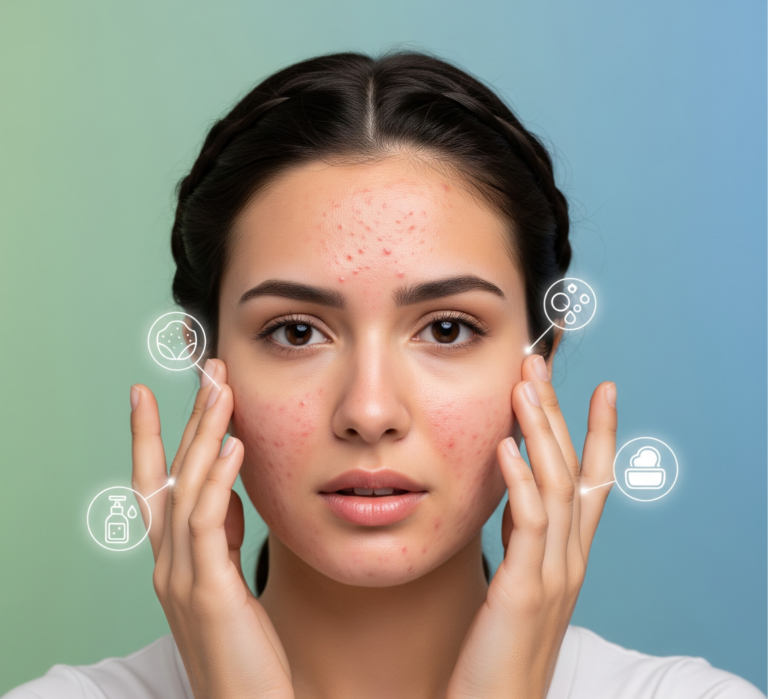
During a dermatology consultation, the doctor may ask when your acne began, where it occurs, whether it fluctuates, and which products or medicines you have tried.
Your skin will be assessed for the type and severity of acne, inflammation, pigmentation and scarring. The doctor may also ask about your medical history, menstrual pattern where relevant, family history and medicines.
Blood tests are not necessary for everyone with acne. They may be considered when symptoms or medical history suggest a possible underlying hormonal or other condition.
You should receive guidance on an appropriate skincare routine and treatment plan, including how to use prescribed products and when to return for follow-up.
Acne treatment in Attapur and Tolichowki, Hyderabad
If you are searching for acne treatment in Attapur or a dermatologist for acne in Hyderabad, MCAO Clinics (Maple Clinical Aesthetics & Obesity Clinic) provides dermatology care at its Attapur and Tolichowki locations.
Dr. Huma Shaheen is associated with the clinic’s dermatology services. The appropriate approach to acne depends on your skin condition, the severity of breakouts, whether marks or scars are present, and any relevant medical factors.
A consultation can help determine which treatment options may be appropriate. Contact the clinic to confirm current services, doctor availability and consultation timings.
2-4-79/1, Pillar No. 180, 1st Floor, Rahmat’s Iconiq Square, Attapur, Rajendranagar, Upperpally, Hyderabad, Telangana 500048.
8-1-400/48, Deluxe Colony, Tolichowki, Hyderabad.
Timings: 12:00 PM–8:00 PM.
Call: +91 83411 92717
WhatsApp: +91 81433 25183
Explore our Dermatology Services and learn more about Dr. Huma Shaheen
Frequently Asked Questions
1. Which dermatologist can I consult for acne treatment in Attapur?
Dr. Huma Shaheen is a chief dermatologist at MCAO Clinics in Hyderabad. If you have recurring pimples, inflamed acne or acne marks, a consultation can help assess your skin and identify suitable treatment options. Confirm her availability with the clinic before visiting.
2. Does Dr. Huma Shaheen treat acne scars and dark spots?
Dark marks and textured acne scars require different approaches. A dermatologist can assess whether the concern is pigmentation, depressed scars or raised scars and discuss appropriate options based on your skin condition.
3. Where can I get acne treatment in Attapur and Tolichowki?
MCAO Clinics has branches in Attapur and Tolichowki, Hyderabad. Check the branch details in this article and contact the clinic to confirm consultation availability, current services and timings.
4. What acne treatments are available at MCAO Clinics?
Acne treatment depends on the individual’s condition. A dermatologist may consider topical medicines, prescription treatments or selected procedures when appropriate. Contact MCAO Clinics to confirm which acne treatments are currently available and whether they are offered at your preferred branch.
5. When should I see Dr. Huma Shaheen for recurring pimples?
Consider a dermatology consultation if pimples keep returning, become painful, leave marks or start forming scars. An assessment can help identify possible triggers and determine whether your current skincare routine or treatment needs to change.
6. Can acne treatment remove pimple marks on the face?
Flat marks may fade gradually and can sometimes improve with suitable topical treatment and sun protection. Textured scars often require a different approach. The best option depends on the type of mark, your skin and whether active acne is still present.
7. How do I find MCAO Clinics near Upperpally or Rajendranagar for acne treatment?
MCAO Clinics’ Attapur branch is located at Rahmat’s Iconiq Square near Pillar No. 180, in the Attapur–Upperpally area of Hyderabad. The clinic also has a branch in Deluxe Colony, Tolichowki. Check the contact details and directions before travelling.
8. How long does acne treatment take to show results?
Many acne treatments need around 6–8 weeks before initial improvement becomes noticeable. More persistent acne may need several months of treatment and follow-up. Results vary, so follow the treatment plan recommended for your skin.
9. Can oily skin cause acne?
Oily skin can contribute to acne because excess sebum may combine with dead skin cells and block hair follicles. However, oily skin does not always lead to acne. A gentle cleanser, non-comedogenic skincare products and suitable acne treatment can help manage breakouts.
10. Does washing your face more often help clear acne?
No. Washing your face too frequently or scrubbing aggressively can irritate the skin and worsen acne. Gently wash your face twice daily and after heavy sweating. If acne continues to return, a dermatologist can help you choose an appropriate treatment routine.
Final thoughts
Acne is common, and having persistent breakouts does not mean you have poor hygiene or have failed at skincare. Understanding the cause, using suitable products and seeking medical advice when needed can help manage acne and reduce the risk of scarring.
If your pimples keep returning or are leaving marks, consider a dermatology assessment rather than repeatedly switching products or relying on harsh home remedies.
For further information, consult trusted medical resources such as the American Academy of Dermatology, the NHS acne guide and Mayo Clinic’s acne overview.
